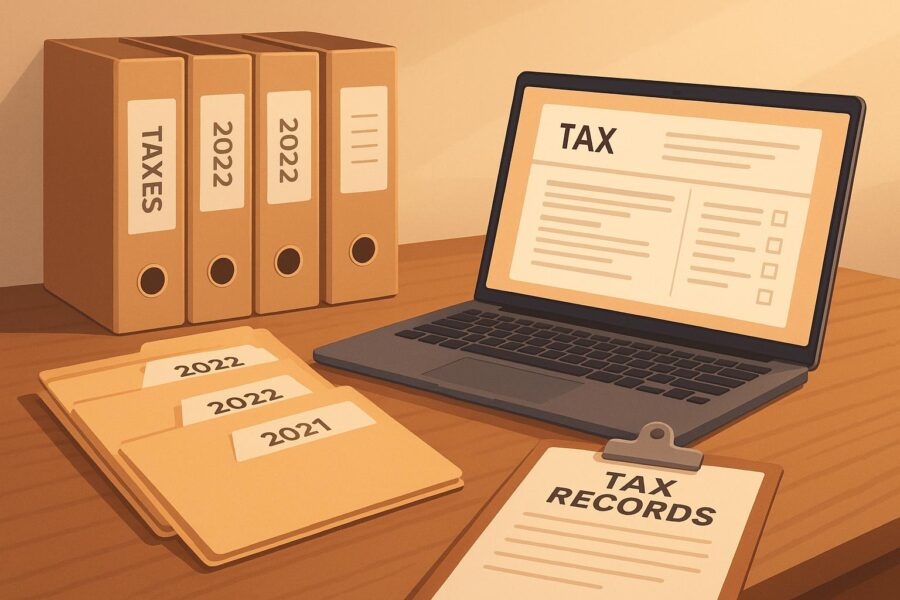
Keeping your tax records organized is crucial for accurate reporting, saving time, and avoiding penalties. Disorganized records can lead to missed deductions, late filings, and audits. By following IRS guidelines, separating personal and business finances, and using tools like accounting software, you can simplify tax preparation and improve financial management. Key steps include:
- Separate finances: Use dedicated business accounts to avoid confusion.
- Organize by category: Track income, expenses, assets, payroll, and tax filings.
- Follow retention rules: Keep records for 3–7 years or longer, depending on the document.
- Maintain regularly: Update records monthly and back up files weekly.
- Use technology: Digital tools streamline recordkeeping and ensure compliance.
Proper recordkeeping not only ensures compliance but also supports better business decisions and financial growth. Start organizing now to reduce stress and stay prepared for audits.
Understanding IRS Recordkeeping Requirements
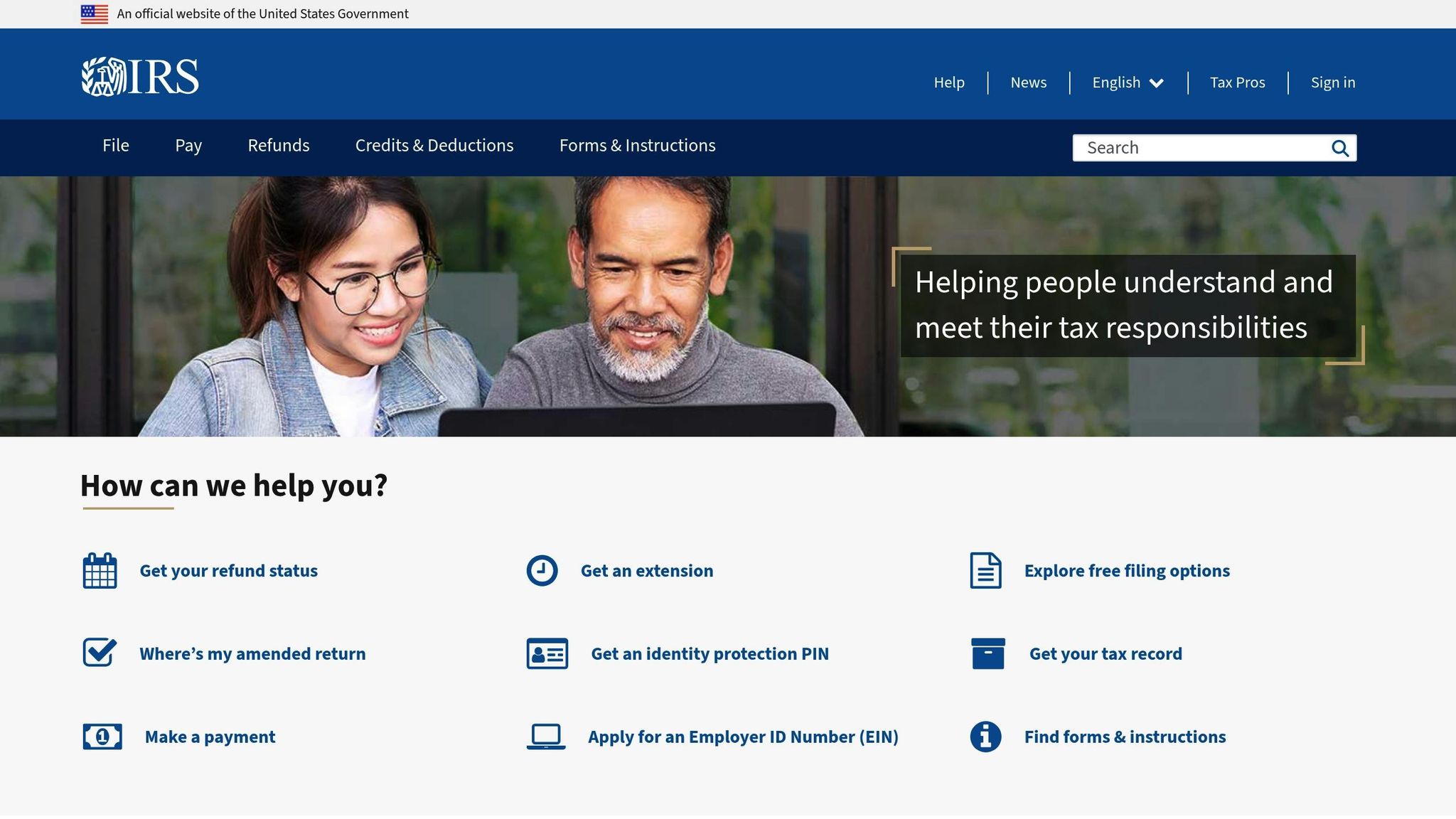
Knowing the IRS’s recordkeeping rules is crucial for staying compliant and backing up your tax returns. The IRS outlines specific expectations for the types of records you should keep and how long to retain them. Keeping accurate records not only ensures you meet these requirements but also safeguards your business during audits.
The IRS mandates that businesses document their income and expenses. These records are the foundation of your tax returns, supporting every deduction and credit you claim.
"You must keep records, such as receipts, canceled checks, and other documents that support an item of income, a deduction, or a credit appearing on a return as long as they may become material in the administration of any provision of the Internal Revenue Code, which generally will be until the period of limitations expires for that return." – IRS
Let’s break down the essential categories, retention timelines, and methods for keeping these records organized.
Types of Business Tax Records to Keep
The IRS expects businesses to maintain documentation for all transactions, including purchases, sales, payroll, and other expenses. These records provide the data needed for bookkeeping and justify the entries on your tax return.
Your recordkeeping system should cover six major categories:
- Gross Receipts: Proof of your business income, such as cash register tapes, deposit slips, receipt books, invoices, and Forms 1099-MISC.
- Purchase Records: Includes canceled checks, cash register receipts, credit card statements, and invoices for items bought for business use.
- General Expenses: Documentation for ongoing costs like utilities, rent, and professional services.
- Travel, Transportation, Entertainment, and Gifts: Requires detailed records as outlined in IRS Publication 463, including the purpose, dates, and amounts.
- Assets: Purchase and sales invoices, real estate closing documents, and canceled checks related to property or equipment. These records are vital for calculating depreciation and gains or losses when selling assets.
- Employment Taxes: Covers hiring documents, payroll records, and tax withholding information for employees.
| Type of Record | Examples |
|---|---|
| Gross Receipts | Cash register tapes, deposit slips, receipt books, invoices, Forms 1099-MISC |
| Purchases | Canceled checks, cash register receipts, credit card receipts/statements, invoices |
| Expenses | Receipts, account statements, credit card receipts/statements, invoices |
| Travel, Transportation, Entertainment, and Gifts | Records required under IRS Publication 463 |
| Assets | Purchase/sales invoices, real estate closing statements, canceled checks |
| Employment Taxes | Payroll registers, withholding tax records, and other employment-related documents |
IRS Guidelines for Retention Periods
The length of time you need to keep records depends on the type of document and your tax situation. Here’s a quick breakdown:
- General Records: Keep most documents for three years. This applies to records supporting your original return or a claim for credit or refund filed after the return.
- Underreported Income: If you fail to report income exceeding 25% of your gross income, retain records for six years.
- Loss Claims: For losses from worthless securities or bad debt deductions, keep records for seven years.
- Employment Taxes: Hold onto these records for at least four years after the tax is due or paid, whichever is later.
- Non-Filed or Fraudulent Returns: In cases of non-filing or fraud, keep records indefinitely.
- Property Records: Retain these until the period of limitations expires for the year you dispose of the property.
Electronic vs. Paper Records
Once you’ve established how long to retain your records, decide whether to store them in paper or digital format. The IRS accepts both, but digital records must meet specific standards.
- Digital Records: These must be accurate, legible, and easily accessible in case of an audit. They’re easy to organize, searchable, and can be backed up to cloud storage for remote access. However, they may require manual scanning if not automatically provided, and there’s always a risk of file corruption or accidental deletion without proper backups.
- Paper Records: These provide tangible proof and are simple to collect at the point of sale. However, they can fade over time (especially thermal receipts) and are harder to search or categorize when needed.
To stay consistent, scan receipts regularly – weekly is ideal – and review expenses monthly to catch duplicates or errors. Always separate personal and business purchases to avoid confusion later on.
Both e-filing and paper filing are secure when handled correctly. E-filing often includes encryption to protect your data, while paper filing requires careful handling to ensure your mailed return stays secure.
Setting Up a Tax Recordkeeping System
A well-organized tax recordkeeping system can reduce the time spent on tax preparation by as much as 40% and save up to 80 hours each year. Following IRS guidelines, you can create a system that not only meets legal requirements but also makes tax reporting much easier. With the IRS planning to increase audits of business tax returns to 22.6% by 2026, having your records in order has never been more important.
Separating Business and Personal Finances
The first step in creating an effective tax recordkeeping system is to separate your business and personal finances. Open a dedicated business bank account and use business-only credit cards for expenses related to your company. This creates a clean financial trail, making it easier to track deductible expenses. For example, setting up automatic transfers from your business account to cover quarterly estimated tax payments ensures these funds remain separate from operating expenses and helps you avoid late filing penalties of up to 5% per month (capped at 25%). Mixing personal and business transactions not only complicates recordkeeping but could also raise red flags during an audit. Once you’ve established these financial boundaries, you’re ready to organize your records for smoother tax reporting.
Organizing Records by Category
After separating your finances, the next step is to organize your records into categories that align with tax reporting requirements. Focus on five main categories: income, expenses, payroll, asset records, and tax filings.
- Income records: Include items like cash register receipts, deposit slips, invoices, and Forms 1099-MISC. Organize these by month or quarter to track revenue trends.
- Expense documentation: Cover all relevant costs, such as utility bills, office supplies, travel expenses, and professional services.
For digital records, label files with the date, vendor, and category (e.g., "2025-01-24_OfficeDepot_Supplies"). Maintain both physical and digital folders for each category. Physical folders should be clearly labeled and stored in a dedicated filing cabinet, while digital records should follow a consistent naming system. To keep everything up to date, review and adjust these categories every quarter. Regular maintenance ensures your records stay accurate and ready for potential audits.
Setting Up Regular Maintenance Practices
Consistency is key to effective recordkeeping. Dedicate time each month to update your records – scan receipts, reconcile accounts, and back up your files weekly. Choose a specific day, like the last Friday of the month, to handle these tasks. During this time, make sure to:
- Scan and categorize new receipts.
- Reconcile bank statements with your accounting software.
- Back up both physical and digital records.
Using a monthly checklist can help you stay on track. Compare your bank statements with your accounting records to ensure every transaction is accounted for and categorized correctly. Address any discrepancies immediately. Regularly reviewing your transactions not only keeps your records accurate but can also help you catch errors or unusual activity early.
Finally, consider using cloud-based tools to automate and secure your recordkeeping. Weekly automatic backups ensure your digital files remain safe and up to date. By sticking to these regular maintenance practices, you’ll keep your tax records organized and audit-ready.
Using Technology and Professional Services
An organized recordkeeping system is a great foundation, but integrating modern technology can take your tax recordkeeping to the next level. By combining digital tools with professional expertise, you can create an automated, accurate system that not only saves time but also ensures compliance with IRS standards. Transitioning from manual processes to digital systems doesn’t just improve efficiency – it also paves the way for leveraging expert guidance to handle complex tax requirements.
Using Accounting Software and Cloud Solutions
Accounting software can handle routine tasks like invoicing, reconciliation, and tax management with ease, reducing errors and streamlining processes. The best software options come equipped with features like general ledger management, accounts payable and receivable tracking, financial reporting, and even automated tax form generation. Many of these tools also integrate seamlessly with mobile and cloud solutions, making them accessible and user-friendly.
Cloud-based systems add another layer of convenience and security. They offer features like secure backups, real-time checklist tracking, audit trails, and role-based permissions, which protect sensitive financial data while keeping everything organized. Tax-specific cloud platforms take it further by centralizing documents and automating compliance tasks. Additionally, these systems integrate with other business tools, such as CRM or inventory management software, making operations more cohesive.
There’s evidence that cloud-based tax compliance solutions can boost both revenue and profitability when compared to traditional on-premise systems. Centralizing documents not only saves time but also simplifies workflows. As Tom Savino, Principal at Bonanno, Savino, Davies & Ganley P.C., puts it:
"The time efficiency that can be had by being able to bring all the documents into one spot consistently from client to client helps the staff people who prepare tax returns know where to look, how to sign off on PDF pages, and how to call up the tax return and compare the same results."
If you’re considering new software, start by evaluating your current tools and identifying gaps. Choose a solution that meets your needs, plan for integration with clear timelines, test thoroughly, and continuously monitor its performance to ensure it delivers the expected results.
How Weston Tax Associates Can Help

While advanced tools can simplify your recordkeeping, professional expertise ensures you’re fully compliant with IRS regulations. Weston Tax Associates combines cutting-edge technology with years of experience to help small and medium-sized businesses manage their tax obligations. Their services include everything from tax filing preparation and compliance management to navigating complex regulations. With over 250 years of combined experience and a track record of saving clients $42 million in taxes, they’re well-equipped to handle even the most challenging tax scenarios.
"Weston Tax Associates is a modern-day tax planning company & regulatory service provider, powered by traditional experiences. We aim to deliver holistic solutions to complex tax issues and how to legally pay fewer taxes and avoid credit loopholes."
Beyond basic compliance, Weston Tax Associates offers strategic planning to help businesses legally minimize tax liabilities. They can assist in setting up recordkeeping systems that support these strategies, ensuring all deductions and credits are well-documented. Their team also stays on top of shifting regulations, so your practices remain up-to-date. And if issues arise, they provide tax resolution services, including IRS negotiation and debt reduction strategies. Their audit support ensures your records are not just compliant today but also prepared for future regulatory changes.
sbb-itb-99cfa38
Compliance Checklists and Avoiding Common Mistakes
Once you’ve established a solid recordkeeping system and regular maintenance routine, the next step is creating a compliance checklist. This checklist acts as a safety net, helping you identify and fix errors before they turn into bigger problems. By using a standardized approach, you can systematically audit your records and stay ahead of potential issues.
Checklist for Well-Organized Tax Records
A well-structured checklist is the backbone of effective tax record management. Conducting regular audits – either quarterly or semiannually – helps ensure your ledgers, invoices, and bank reconciliations are accurate and properly documented. This proactive approach can save you time and stress down the line.
Here’s a real-world example: In Q3 2024, Acme Corp used quarterly audits to uncover $15,000 in misclassified expenses. This process not only corrected errors but also reduced their annual mistakes by 20%.
Using a standardized checklist doesn’t just promote consistency; it also simplifies external reviews and builds confidence in the accuracy of your records. Plus, it allows you to spot patterns, address discrepancies quickly, and resolve issues before they escalate.
For the best results, combine these audit practices with your ongoing maintenance efforts and any software tools you’re already using. Together, they create a strong foundation for staying compliant with tax regulations.
Conclusion: Key Takeaways for Tax Recordkeeping
Throughout this guide, we’ve shown how staying organized is essential not just for compliance but also for fostering business growth. Keeping your tax records in order lays the groundwork for long-term success. The strategies we’ve discussed work hand in hand to safeguard your business while enabling smarter financial planning.
The Long-Term Benefits of Organized Tax Records
The advantages of good recordkeeping go well beyond the stress of tax season. Businesses with well-organized financial records have been shown to boost profitability by up to 20%, proving that staying organized has a direct impact on your bottom line.
These benefits also improve trust with investors by ensuring accurate financial reporting. Additionally, clear and well-maintained records can protect you from penalties and make audits far less daunting. Whether it’s meeting federal requirements to retain records for up to six years or adhering to state-specific rules, having everything properly documented simplifies compliance.
Perhaps most importantly, accurate records give you the tools to make better financial decisions. Quick access to transaction histories, expense breakdowns, and financial trends means you’re better equipped to evaluate investments, control expenses, and seize growth opportunities.
Next Steps for Implementing Best Practices
To put these benefits into action, start with a few key steps.
- Assess your current setup: Review how you currently store receipts, invoices, and other financial documents. Identify gaps where records might be missing or misfiled.
- Set up a clear filing system: Organize your documents by tax year, with separate folders for income and expense categories. Using labels or color-coding can make retrieval faster and more efficient.
- Consider digital tools: Accounting software can automate many tasks, reduce errors, and make recordkeeping easier. Regularly reconciling accounts – like bank statements and credit card records – will also help ensure accuracy.
- Commit to regular maintenance: Don’t wait until tax season to get things in order. Schedule quarterly reviews to catch mistakes early. Many businesses have reduced costly errors by sticking to consistent auditing practices.
If you’re unsure where to start or need expert help, Weston Tax Associates can guide you. Their team specializes in tax compliance and planning, helping businesses establish and refine recordkeeping systems that align with both regulatory requirements and financial goals. Whether you need help setting up a system from scratch or optimizing what you already have, their expertise can save time and provide peace of mind.
The sooner you adopt strong recordkeeping habits, the more benefits you’ll see over time – improved financial health, smoother operations, and better decision-making. Start today, and let these practices work in your favor.
FAQs
What are the best digital tools to organize tax records and ensure IRS compliance?
Using the right digital tools can take the headache out of organizing tax records while keeping you on the right side of IRS rules. Tools like accounting software, document management systems, and AI-powered tax solutions can make a big difference. They securely store records, automate data entry, and categorize expenses, which helps cut down on mistakes.
These tools also make life easier when it comes to finding receipts and documents quickly – especially helpful during audits. With everything accurate, organized, and easy to read, you’ll not only meet IRS standards but also reduce stress. For businesses aiming to simplify their tax processes, investing in these technologies is a practical choice.
How can I organize my tax records to stay compliant and be prepared for an audit?
To ensure you’re prepared for audits and stay within IRS guidelines, hold onto all documents used for your tax return for at least three years. For specific cases, like bad debts or worthless securities, it’s best to keep records for up to seven years.
Organize your records by categories such as income, expenses, payroll, and assets. Use labeled folders or digital tools to keep everything neat and easy to find. A well-organized system not only simplifies tax filing but also allows you to respond quickly if the IRS requests additional information.
If you’re uncertain about certain rules or need expert advice, consulting professionals like Weston Tax Associates can be a smart move. They specialize in helping businesses stay compliant while minimizing tax burdens.
What happens if I don’t keep my tax records organized, and how can I prevent issues?
Not keeping your tax records in order can lead to major headaches – think IRS audits, hefty penalties, fines, or even legal trouble. Beyond that, messy records can make it tough to secure loans or funding, as lenders usually require clear and detailed financial documentation. Plus, disorganization increases the risk of mistakes during tax filing, which could leave you paying more than you actually owe.
To steer clear of these problems, take a proactive approach to organizing your records. Use reliable digital tools to securely store and categorize your documents, track your income and expenses consistently, and keep all relevant receipts and statements. If the process feels like too much to handle, reaching out to a professional can be a game-changer. Staying organized not only keeps you compliant but also saves you stress and protects your business from unnecessary financial and legal troubles.

Chris is the Managing Partner at Weston Tax Associates, a best-selling author, and a renowned tax strategist. With over 20 years of expertise in tax and corporate finance, he simplifies complex tax concepts into actionable strategies that drive business growth. Originally from Sweden, he now lives in Florida with his wife and two sons.