Most business owners think tax planning is something you do at the end of the year, sometime between Thanksgiving and New Year’s Eve, usually after a glass of wine and a mild panic attack. I get it. That’s how I thought about taxes early in my career too.
But here’s the uncomfortable truth I’ve learned after years of working with small and mid-sized business owners: by the time December rolls around, most of the real planning opportunities are already gone. What’s left is compliance. And compliance is not strategy.
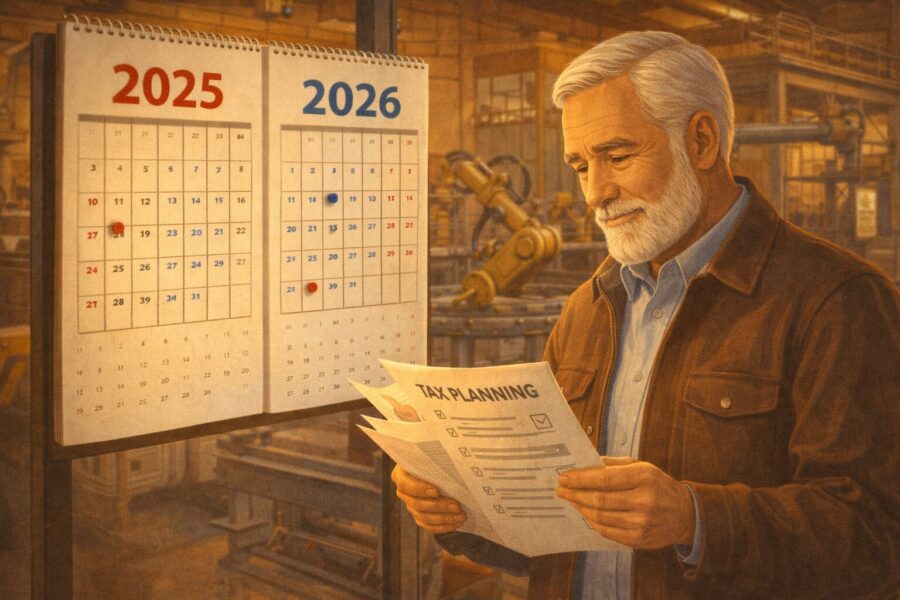
The end of 2025 is not just a finish line. It’s the starting gate for 2026. The decisions you make today, this quarter, and this year quietly shape what your tax bill will look like next year. Taxes don’t reset on January 1. They compound based on behavior, structure, timing, and intent.
This is why I tell clients the best time to start tax planning is now. Not later. Not after you “see how the year shakes out.” Now, while you still have control.
Tax Planning Versus Tax Compliance
One of the biggest mindset shifts I try to help business owners make is separating tax planning from tax compliance. They are not the same thing, even though most people lump them together.
Tax compliance is the cost of doing business. It’s filing returns, meeting deadlines, reporting what already happened, and making sure the math is right. Compliance looks backward. It documents history. It keeps you out of trouble, which is important, but it rarely saves you meaningful money.
Tax planning, on the other hand, is an investment. It looks forward. It asks better questions. It focuses on return on investment, not just accuracy. Planning is about shaping outcomes before they become permanent.
I’ve seen plenty of perfectly prepared tax returns that were still wildly inefficient. Nothing was “wrong,” but a lot was missed. Wrong entity. Poor timing. Income stacked in the wrong year. Deductions taken too late. Credits never explored. Retirement strategies ignored. Asset protection left to chance.
Compliance keeps you legal. Planning makes you intentional.
Why “Later” Is the Most Expensive Decision
I can’t count how many times someone has told me, “Let’s circle back after the year is over,” or “I’ll deal with that next year when things calm down.”
They mean well. They’re busy. They’re building companies, managing people, putting out fires. But “later” is where tax savings go to die.
Most tax strategies require time. Entity changes don’t work retroactively. Retirement plans need to be established before certain deadlines. Compensation strategies need payroll history. Depreciation planning starts when assets are acquired, not when the return is filed. Income shifting only works if it’s done before the income is earned.
Waiting until tax season is like trying to remodel your house after it’s already sold. You can repaint the walls, but you can’t move the foundation.
A Story I See Play Out Every Year
A few years ago, a business owner came to me in March. Let’s call him Mike. Mike ran a successful service business and had just finished his best year ever. Revenue was up. Profits were strong. On paper, everything looked great.
Then he got his tax bill.
He wasn’t angry. He wasn’t shocked. He was just… deflated. He said, “I knew it would be bad, but I didn’t think it would be this bad.”
As we talked, the pattern became clear. Mike had a solid accountant. His returns were clean. But there was no planning. He was operating as an LLC taxed as a sole proprietor even though his income screamed for a different structure. He took income as it came without thinking about timing. He bought equipment without any depreciation strategy. He had no retirement plan beyond a vague idea of “someday.”
The hardest part of that meeting was explaining that most of what he wanted to do would have worked beautifully if we had started six months earlier. Now, all I could do was help him plan for the future and minimize the damage going forward.
That conversation stuck with me because it wasn’t about intelligence. Mike was smart. It wasn’t about effort. He worked hard. It was about timing and awareness.
Entity Structure Is the First Domino
If tax planning were a house, entity structure would be the foundation. Everything else sits on top of it.
I see business owners default into entities all the time. An LLC because it was easy. An S-Corp because someone on YouTube said it saves taxes. A partnership because that’s how they started. Very few stop to ask whether the structure still makes sense for where they are now.
Different entities are taxed differently. They create different planning opportunities. They carry different risks. They interact with retirement plans, payroll taxes, and asset protection in very different ways.
An LLC taxed as a sole proprietor can be simple, but simplicity gets expensive at higher income levels. An S-Corp can create payroll tax savings, but only when it’s implemented correctly and monitored carefully. Partnerships offer flexibility but come with complexity that many owners underestimate.
There is no universally “best” entity. There is only the best entity for your current income, your growth trajectory, your risk profile, and your long-term goals.
The S-Corp Myth and the Reality
I spend a lot of time undoing S-Corp myths. The S-Corp is not a magic switch you flip to make taxes disappear. When used correctly, it can be powerful. When used incorrectly, it can create audits, penalties, and frustration.
The real value of an S-Corp is not just payroll tax savings. It’s structure. It forces discipline around compensation. It opens doors to certain retirement strategies. It creates clarity between wages and profits. But it also comes with rules. Reasonable compensation is not optional. Payroll has to be done correctly. Distributions need to be tracked. Compliance matters more, not less.
I’ve seen business owners save tens of thousands of dollars with a properly implemented S-Corp. I’ve also seen others end up worse off because no one explained the full picture. Planning means understanding both sides before you elect anything.
Timing Is Where Strategy Lives
One of the least understood aspects of tax planning is timing. When income is recognized. When expenses are incurred. When assets are placed in service. When elections are made.
Two businesses with identical profits can have wildly different tax outcomes simply because of timing decisions. Accelerating deductions into the right year. Deferring income when appropriate. Coordinating bonuses, retirement contributions, and equipment purchases so they actually work together.
This is why starting early matters. Timing is not something you fix later. It’s something you design ahead of time.
Planning Is Personal, Not Generic
I’ve never believed in one-size-fits-all tax advice. Your business is not generic. Your family situation is not generic. Your risk tolerance is not generic.
Some owners want to reinvest aggressively. Others want stability. Some are building to sell. Others want cash flow for lifestyle. Some are comfortable with complexity. Others value simplicity.
Good tax planning respects that. It adapts to you, not the other way around.
That’s also why I write from personal experience. The strategies I talk about aren’t theoretical. They’re things I’ve seen work, things I’ve seen fail, and things I’ve refined over years of real conversations with real business owners.
Why the End of 2025 Matters Right Now
As we move toward the end of 2025, many business owners are already thinking about closing the books and turning the page. That instinct makes sense emotionally, but strategically it’s incomplete.
The end of one year is the beginning of the next planning cycle. Decisions made now affect cash flow, tax brackets, deductions, and opportunities in 2026. Waiting until January doesn’t reset the board. It just limits your options.
This is the window where proactive planning has the highest return. Not because anything is urgent, but because nothing is locked in yet.
What a Real Planning Conversation Looks Like
A real tax planning conversation doesn’t start with forms. It starts with questions.
Where is your income coming from, and where is it going? How predictable is it? What are you building toward? What keeps you up at night? What does “success” actually look like for you?
From there, structure, timing, and strategy fall into place. Not as isolated tactics, but as part of a cohesive plan.
This is also where trust matters. Planning only works when there’s honesty and clarity on both sides. Numbers tell a story, but only if they’re complete.
The Cost of Doing Nothing
Doing nothing is still a decision. It’s just a passive one.
Every year you operate without a plan, you’re locking in outcomes you may not like later. You’re paying for simplicity with cash. You’re trading optionality for convenience.
Some years that’s fine. Other years it’s expensive.
The business owners who get the best results aren’t necessarily the most aggressive. They’re the most intentional.
A Simple Next Step
If any part of this feels familiar, that’s not an accident. Most business owners sense when they’re leaving money on the table. They just don’t know where to start.
That’s where a conversation helps. Not a sales pitch. Not a rush. Just a clear look at where you are and what’s possible if you start planning now instead of later.
If you want to explore what that could look like for you, book a session. Even one well-timed decision can change the trajectory of your next few years.
Bringing It All Together
Tax planning isn’t about tricks. It’s about timing, structure, and intention. It’s about starting early enough to have real choices. It’s about treating taxes as a strategic lever, not just a bill to be paid.
The end of 2025 is already shaping 2026. Whether you participate in that process or let it happen to you is up to you.
I’ve seen what happens on both sides of that choice.
Welcome to the New Age of Accounting. Let’s begin.
P.S. If you found this article helpful, you’ll love my new book S-Corp Mastery: How Smart Business Owners Maximize Tax Savings & Build a Lasting Legacy. It’s now live and available in a sleek, easy-to-read PDF version. Grab your copy here.

Chris is the Managing Partner at Weston Tax Associates, a best-selling author, and a renowned tax strategist. With over 20 years of expertise in tax and corporate finance, he simplifies complex tax concepts into actionable strategies that drive business growth. Originally from Sweden, he now lives in Florida with his wife and two sons.